
Is Super-All Wheel Control on the 2026 Mitsubishi Eclipse Cross worth it for Benbrook, TX drivers?
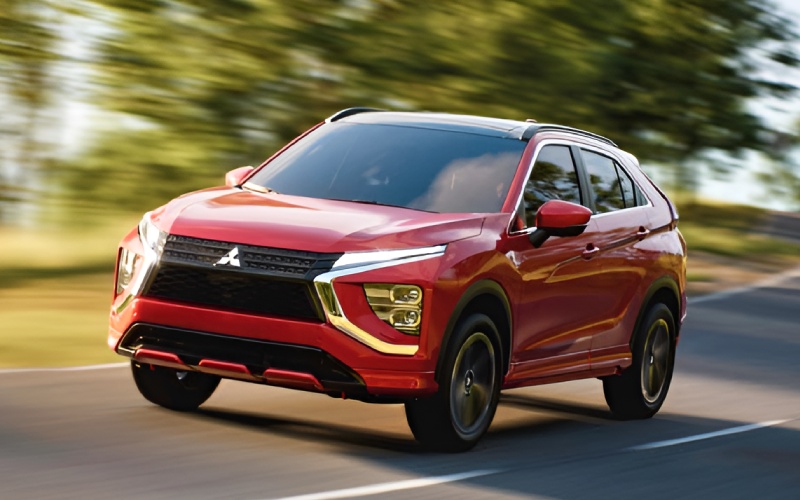
Lonestar Mitsubishi – Is Super-All Wheel Control on the 2026 Mitsubishi Eclipse Cross worth it for Benbrook, TX drivers?
The short answer many shoppers expect when they ask about Super-All Wheel Control (S-AWC) is a simple yes or no, but the real value shows up in everyday driving around Benbrook, TX. S-AWC is Mitsubishi’s integrated traction and stability system, and it’s standard on the 2026 Eclipse Cross. That means every trim is engineered to inspire confidence on neighborhood streets, winding routes along Lake Benbrook, and busy I-20 interchanges — without you having to toggle a thing.
Let’s break down what S-AWC is, how it behaves on local roads, and how to evaluate its benefits on your test drive. We’ll also answer a few common questions about maintenance, tires, and how S-AWC differs from typical all-wheel drive, so you can decide with clarity.
What S-AWC Does Differently
Many AWD systems focus on sending power front to rear when slip is detected. S-AWC goes further. It integrates traction and stability control functions to help manage torque distribution and braking force side-to-side, enhancing stability as you corner and settle the vehicle after quick maneuvers. You feel it most when you’re merging, taking a curved on-ramp, or accelerating away from a light on uneven pavement. The Eclipse Cross stays composed, and corrections feel subtle — like the vehicle is simply sure of itself.
Because S-AWC is standard, you don’t have to chase a higher trim level to get year-round confidence. Pair that with available features like the Multi-View Camera System and Blind Spot Warning (BSW) with Lane Change Assist (LCA) and Rear Cross Traffic Alert (RCTA), and the Eclipse Cross gives you a 360-degree sense of control that’s genuinely helpful in dense traffic or crowded parking areas.
How It Helps Around Benbrook
Local roads present a mix of smooth stretches, patched asphalt, and curve-heavy routes near the water. S-AWC settles the Eclipse Cross over patchwork surfaces, resists wheelspin as you pull away from an uphill stop, and maintains calm chassis motions on sweeping bends. On weekend runs toward Aledo or through rolling sections west of town, the SUV feels poised and predictable. In day-to-day use, the payoff is simple: fewer steering corrections and a quieter, more confident drive.
Benbrook commutes tend to include short highway bursts and neighborhood connectors — the exact scenarios where S-AWC’s seamless operation shines. It’s not just a safety net for bad weather; it’s a confidence builder for routine driving.
Test Drive Tips to Feel S-AWC Working
To really sense what S-AWC brings, ask your product specialist for a route that includes a neighborhood warm-up, a highway merge, and a few sweeping ramps. That combination will highlight how planted the Eclipse Cross feels at speed, how smoothly it accelerates with the 1.5L turbocharged engine and CVT, and how stable the chassis remains through curves.
- Start on a calm street to gauge steering feel and ride comfort
- Use a highway on-ramp to check acceleration and chassis stability
- Take a broad curve and notice how composed the SUV feels
- Finish with a parking-lot maneuver to try camera views and driver aids
If you carry family gear, fold the rear seats and load a couple of bulky items to test the cargo floor. Try the available Handsfree Power Tailgate, and pair your phone to explore the touchscreen and Mitsubishi Connect with Safeguard And Remote Services And 24-Month Trial (Enrollment Required). The more you test your real-life scenarios, the clearer the value becomes.
What About Maintenance and Tires?
S-AWC is designed to work in the background without extra steps from you. Routine maintenance stays straightforward: follow the Owner’s Manual intervals for inspections and fluid changes, and rotate your tires regularly. Matching tire brand, size, and wear across the set helps S-AWC perform at its best, so if you replace tires, do so as a full set when possible.
AWD vs. S-AWC: The Practical Difference
Both AWD and S-AWC improve traction, but S-AWC’s integrated approach enhances stability and cornering feel in a way many drivers notice. It’s not about off-road heroics — it’s about everyday composure, especially on imperfect pavement, painted crosswalks, or abrupt lane changes. For many Benbrook, TX shoppers, that’s exactly where value lives.
Frequently Asked Questions:
Is S-AWC standard on every 2026 Eclipse Cross?
Yes. Super-All Wheel Control (S-AWC) is standard across the 2026 lineup, so you don’t need to choose a higher trim to get it.
Does S-AWC require extra maintenance?
No special routine is required beyond the maintenance in the Owner’s Manual. Keeping tires properly inflated and evenly worn helps maintain optimal S-AWC performance.
Can I tow with the Eclipse Cross?
When properly equipped, the Eclipse Cross can tow up to 1,500 pounds. Always consult the Owner’s Manual and follow all towing guidelines.
How does S-AWC feel in normal driving?
S-AWC works seamlessly in the background. Most drivers describe it as an added sense of calm — less wheelspin on loose surfaces, a planted feel in curves, and straightforward, surefooted acceleration.
Final Thoughts
If you want a compact SUV that feels confident whether you’re heading to dinner off Benbrook Boulevard or navigating I-20, the 2026 Eclipse Cross with S-AWC delivers. It’s an always-on advantage you’ll appreciate from the first mile. At Lonestar Mitsubishi, serving Weatherford, Benbrook, and Aledo, our team can tailor a route that mirrors your daily routine and show you how safety and tech features support stress-free driving. Bring your questions, test the scenarios you care about, and see if S-AWC makes the Eclipse Cross the right fit for you.

0 comment(s) so far on Is Super-All Wheel Control on the 2026 Mitsubishi Eclipse Cross worth it for Benbrook, TX drivers?